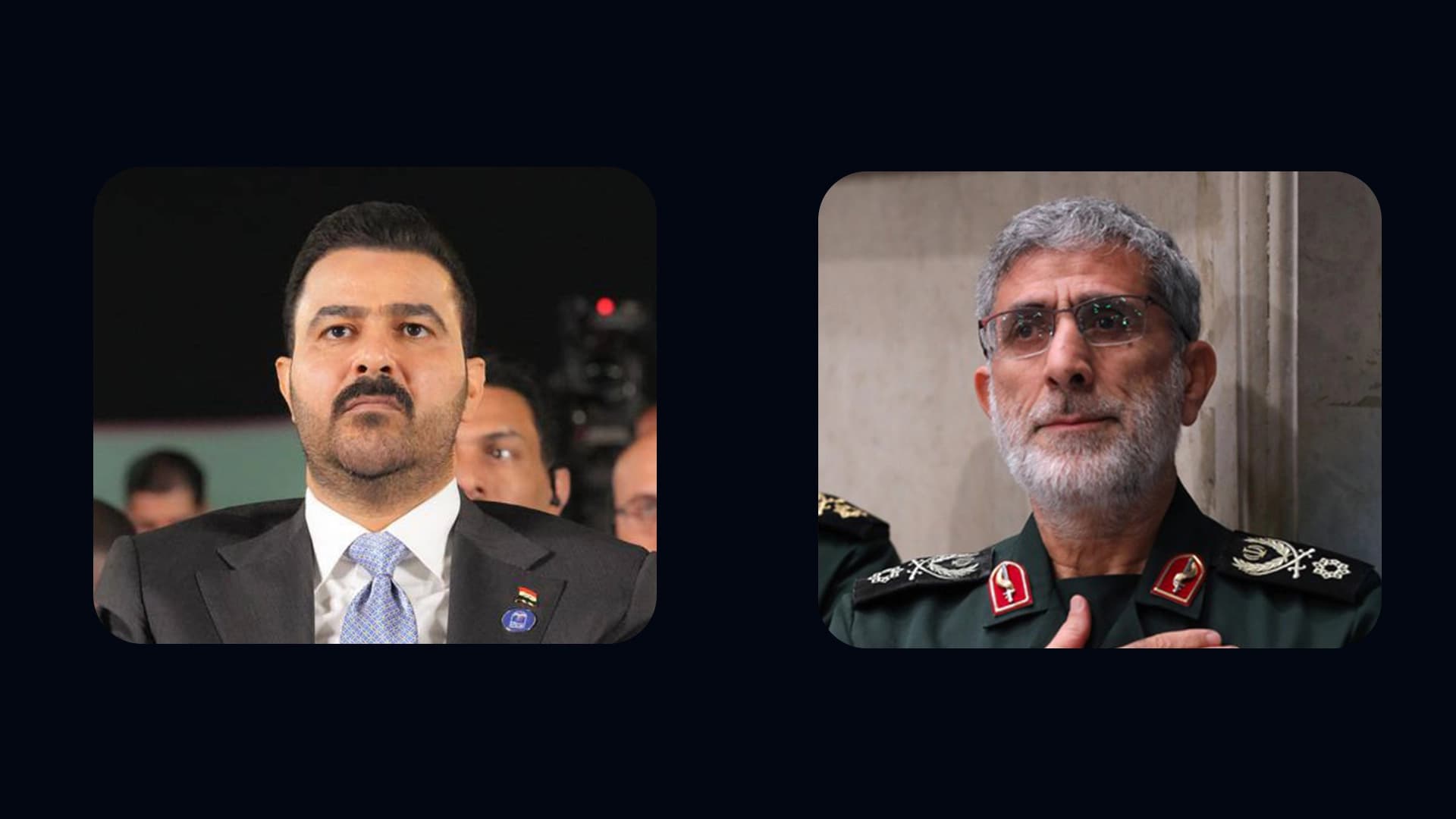

ERBIL, Kurdistan Region - Iraqi Prime Minister Ali al-Zaidi met with Islamic Revolutionary Guard Corps (IRGC) Quds Force commander Esmail Qaani on Monday night, insisting that Kata’ib Hezbollah forces withdraw peacefully from their stronghold in Jurf al-Sakhr, southwest of Baghdad, or face intervention by Iraqi security forces, two senior Iraqi officials told Rudaw.
The two officials, speaking to Rudaw’s Malik Mohammed on Tuesday on condition of anonymity because of the sensitivity of the discussions, said Zaidi met Qaani at 10 pm Baghdad time, after a tense meeting with leaders of the ruling Shiite Coordination Framework over the Iran-aligned faction's stronghold.
Jurf al-Sakhr is a strategic town 60 kilometers (38 miles) southwest of Baghdad that fell under the tight control of Iran-backed armed factions like Kata'ib Hezbollah after being recaptured from the Islamic State (ISIS) in 2014. The restricted area has recently been the focus of high-level Iraqi government investigations into alleged oil smuggling and unauthorized pipeline activities.
In the meeting, Qaani proposed a negotiated settlement to prevent the confrontation from escalating into armed clashes, according to the officials. Zaidi, however, refused to back down from his demand that Kataib Hezbollah withdraw from Jurf al-Sakhr.
The prime minister told Qaani that the faction could “either leave through negotiations or through force,” the officials said.
The meeting lasted between one and two hours, with Qaani reportedly leaving dissatisfied after Zaidi refused to soften his position. The Iranian general subsequently returned to Iran, according to the officials.
The standoff over Jurf al-Sakhr has emerged as a major test of Zaidi's efforts to bring armed factions under state control, as Baghdad seeks to dismantle Kataib Hezbollah's longstanding grip on the strategically important town. The confrontation has also exposed divisions within Iraq's ruling Shiite political establishment, with some leaders backing the government's efforts and others seeking a negotiated settlement to prevent clashes between Iraqi security forces and the Iran-aligned faction.
The confrontation has intensified since several Iraqi media outlets published a leaked intelligence report last week alleging organized oil smuggling by Kataib Hezbollah in Jurf al-Sakhr.
On Saturday, Zaidi dismissed nine senior security and administrative officials following a government investigation into the alleged smuggling operations, ordering suspects to be referred to the judiciary. Kataib Hezbollah has rejected the allegations, accusing the government of fabricating reports to pressure the faction into surrendering its weapons.
The dispute has raised fears of an armed confrontation, with Zaidi ordering additional security forces to be deployed around Jurf al-Sakhr and demanding the faction's withdrawal.
Rudaw English reported on Tuesday that Ali al-Daffayi, spokesperson for the Islamic Supreme Council of Iraq, said the Coordination Framework had reached an understanding with Zaidi to replace Kata’ib Hezbollah forces with another Popular Mobilization Forces (PMF) formation within 10 to 14 days.
Daffayi said that the agreement would prevent military confrontation, contradicting Iraqi media reports that Monday's Coordination Framework meeting had ended without a settlement.
However, senior Kata’ib Hezbollah figure Abu Talib al-Saeedi rejected the prospect of withdrawal during a press visit to Jurf al-Sakhr on Tuesday.
“That will not happen, not even over our dead bodies,” Saeedi told AFP.
Despite the reported mediation efforts, neither Baghdad nor Tehran has publicly confirmed the details of Zaidi's meeting with Qaani or announced an agreement on Kata’ib Hezbollah's withdrawal.