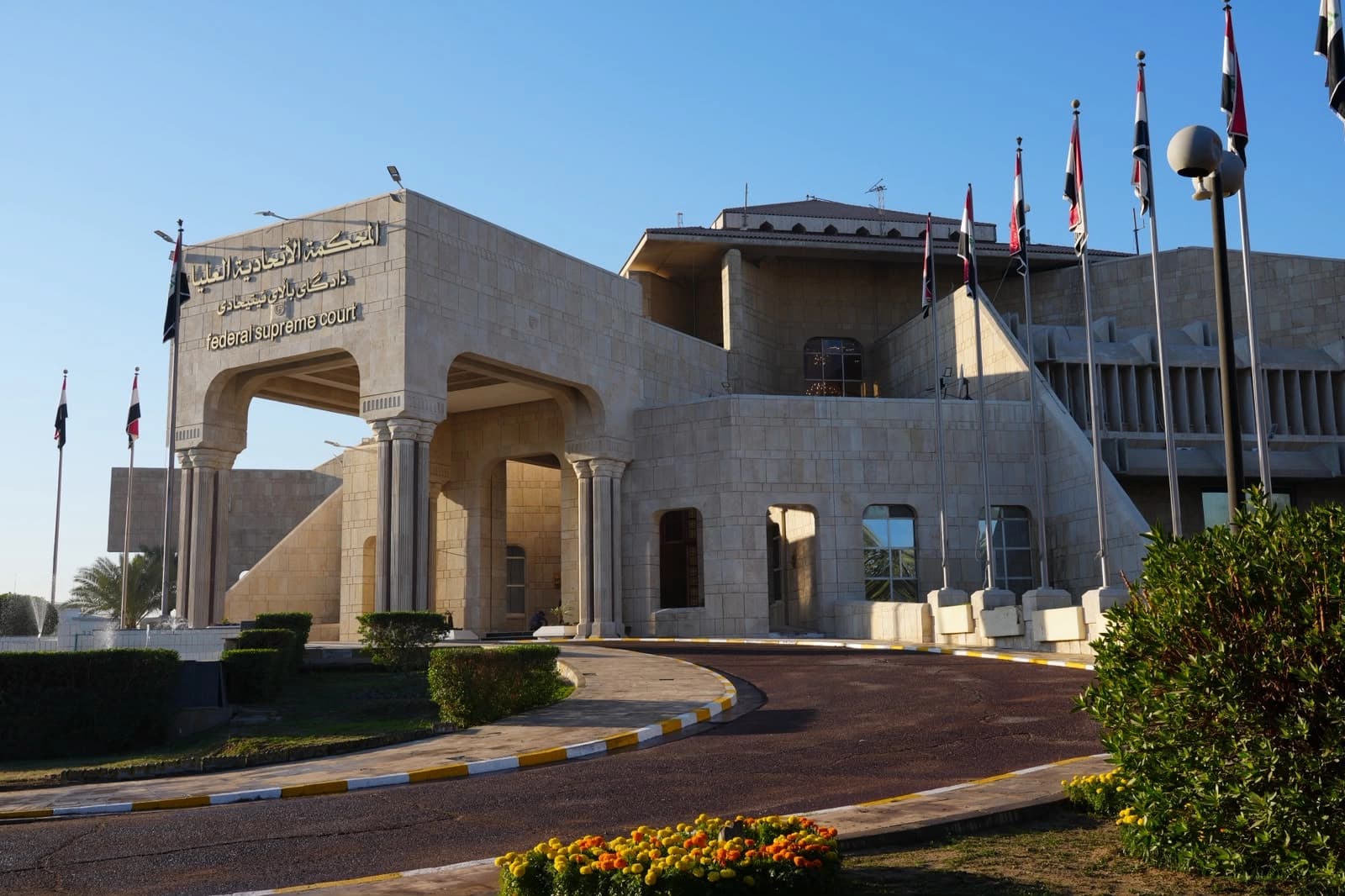

ERBIL, Kurdistan Region - Iraq’s Federal Supreme Court has rejected two separate legal challenges concerning the Kurdistan Parliament, declining to suspend decisions made during its session earlier this month and dismissing a lawsuit contesting the constitutionality of the legislature’s continued sixth term.
In a Wednesday statement regarding a November 15 ruling, the court said it “rejected the request for a provisional order” which sought to “suspend the implementation of the effects, procedures, and decisions resulting from the Kurdistan Region Parliament session” held on November 4, citing the absence of “urgency and the requirement of not prejudicing the merits of the right.”
The ruling does not mean that the court has declared the parliamentary session either constitutional or unconstitutional. It only concerns the request for a temporary measure to suspend the consequences of that session.
In a separate statement issued on Wednesday, the court published its October 26 decision, dismissing a Kurdistan Parliament member lawsuit that sought to declare “the continuation of the sixth term of the Parliament of the Kurdistan Region of Iraq unconstitutional,” ruling that it lacked jurisdiction to hear the case.
The court decisions come amid a prolonged political dispute between the ruling Kurdistan Democratic Party (KDP) and the Patriotic Union of Kurdistan (PUK) that had left the Kurdistan Parliament largely inactive for nearly two years, following the October 2024 parliamentary elections.
The legislature reconvened through a KDP-led initiative supported by minority representatives, smaller political groups and lawmakers who broke ranks with their parties, including three PUK members. A total of 52 lawmakers attended the session, narrowly surpassing the 51-member quorum required in the 100-seat legislature.
The move prompted an immediate backlash from PUK leader Bafel Talabani, who called the move “illegal” and announced his party’s withdrawal from the Kurdistan Regional Government (KRG) cabinet and boycott of subsequent meetings in protest against parliament's reactivation without its participation.
Talabani on Thursday rejected the latest call by KDP President Masoud Barzani for dialogue, dismissing the offer as “an old trick.”
“In our opinion, and after a thorough study [of the matter], it was not serious. Messages for sitting down [to negotiate] and messages for diplomacy are not sent through the media,” he told reporters.
“What we have understood from what was said in the media ... is that it serves as a pretext for a future step they intend to take, so that later they can say, 'Look, we asked to sit down and negotiate, and they didn't come,'” he said.
“These games are old; nobody falls for that trick anymore,” he added.
The remarks come three days after Barzani called on the PUK to sit down with the KDP to resolve their differences. “The interest of the people of Kurdistan is greater than any other interest or objective,” President Barzani said.
The KDP-PUK dispute has drawn comments from US Special Envoy for Syria and Iraq Tom Barrack, who urged Kurdish leaders last week to overcome their differences and strengthen coordination with Baghdad, saying the divisions were affecting the Region's stability and economic interests.
“I cannot go back to Congress and explain the complexity of the Iraqi constitution and the federalist delineation of the Kurdistan Region and how it dovetails with Baghdad, and then say besides that, we have a series of disputes of families within the Kurdistan Region that are subjecting our American companies and our international companies, who are the source of revenues to the entire region … to be subjugated to what's happening now,” he said.
Barrack made his comments during a Chatham House event in London, where he urged Kurdish leaders to “get over” what he deemed “tribal dismays,” stressing that resolving the disputes was an Iraqi matter rather than one for Washington to decide.