.jpeg&w=3840&q=75)
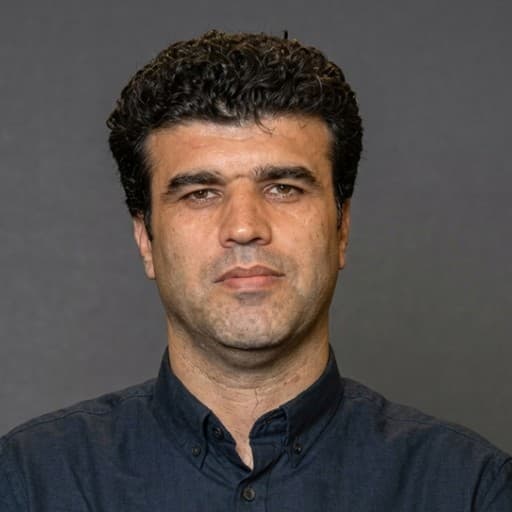
ERBIL, Kurdistan Region - The trial of a man accused of masterminding the worst migrant tragedy recorded in the English Channel began in Erbil on Wednesday, with representatives from the UK and France attending the hearing.
Bashdar Mena Abdullah is accused of being the main organizer behind a dinghy that set sail from the northern French coast towards Dover, a major UK ferry point, on the evening of November 23, 2021, carrying at least 21 Kurdish migrants. He is being tried under Article 8 of Iraq’s Anti-Human Trafficking Law, (Law No. 28 of 2012), whose penalty entails capital punishment if the act of human trafficking leads to the death of the victim.
The dinghy capsized in the English Channel, leaving 32 people dead and only two survivors. French authorities recovered 27 bodies, while the remains of four victims from the Kurdistan Region were never found. One woman was believed to have been pregnant.
On September 30, a court in Paris convicted six members of the human smuggling network of “involuntary manslaughter” following a four-week trial, sentencing them to between six and ten years in prison. Of the 14 defendants on trial in Paris, one was acquitted, while seven others were convicted of smuggling-related offences and sentenced to up to four years in prison.
Wednesday's hearing began at around 10:30 am in the Fourth Criminal Chamber of Erbil, with relatives of at least ten victims in attendance.
Abdullah entered the courtroom wearing a yellow vest bearing the Erbil police insignia. Clean-shaven and well-groomed, he walked across the room without looking towards the mothers, fathers and siblings of those who had lost their lives.
He took his place behind a brown partition, with two police officers standing behind him.
The presiding judge, assisted by two other judges, began by reading out the names of the victims and outlining the events that led to their deaths in the cold November waters of the English Channel.
Seven men and five middle-aged women wearing hijabs stood before the judges, seeking justice for their loved ones.
As the judge recounted the tragedy, women seated at the back of the courtroom broke down in tears.
“Nouri Mohammad Ameen,” the judge called out as he went through the names of relatives involved in the case.
“Not present. He has cancer,” replied Zana Mamand, who represents the families and whose brother Twana died in the tragedy.
Nouri's daughter, Baran, was among those on the dinghy. She had hoped to reunite with her fiancé in the UK.
Mamand was the only relative called to give evidence during Wednesday's hearing.
He spoke about his brother Twana, an avid footballer whose body was never recovered. Twana's mother sobbed at the back of the courtroom as other women joined her in tears.
Mamand told the court that he had deposited $3,200 with a money exchanger in Hajiawa, a town in Sulaimania province, to arrange the journey for his brother and three friends.
He said the money exchanger worked directly with Bashdar.
The prosecutor then asked Mamand whether he could identify the accused.
“Is the man in the dock the same person you spoke to on the phone?” the prosecutor asked.
Mamand replied that he had never met Bashdar in person before the November 2021 tragedy and therefore could not be certain.
He also told the court that Bashdar had contacted his family and other bereaved relatives after the tragedy, seeking to reach an agreement and prevent them from filing complaints.
“He was prepared to do anything we asked in order to resolve the issue and stop us from lodging a complaint,” Mamand told the judges.
The families rejected the offer, he said.
The judge appeared surprised that the money exchanger in Hajiawa had not been investigated, despite his alleged role in handling payments for the journey.
The court subsequently adjourned proceedings and ordered an investigation into the money exchanger before the trial could resume.
No date was set for the next hearing, pending the outcome of that investigation.
For the families, who have spent nearly five years seeking accountability for the deaths of their loved ones, Wednesday's proceedings marked another step in their long pursuit of justice.
“I will come to court to get justice for them for as long as I have energy,” Rizgar Hussein said as he left the courtroom.