
ERBIL, Kurdistan Region - The United States Department of State confirmed late Wednesday that it had issued an "ordered departure" for non-emergency US government personnel and their family members in Saudi Arabia following increased attacks by the Iran-aligned Ansarullah movement, widely known as the Houthis.
“The U.S. Department of State issued an ordered departure for non-emergency U.S. government employees and their family members in Saudi Arabia only,” Department spokesperson Tommy Pigott posted on X.
“Iranian-supported Houthis have increasingly engaged in hostilities against Saudi Arabia, including attacks on civilian airports and other critical infrastructure resulting in civilian casualties and severe travel disruptions,” he stated.
The latest wider round of escalation with the Houthis began in mid-July, when the Saudi-aligned internationally recognized government in Aden disabled a runway at Houthi-controlled Sanaa International Airport to prevent an Iranian aircraft from landing.
The Houthis then launched ballistic missiles and drones at Abha International Airport and announced a blockade of Saudi shipping in the Red Sea, framing it as “siege for siege,” a reference to what they describe as a Saudi blockade of their ports.
Riyadh categorically denied the latter accusation. In response, Saudi-led coalition warplanes struck Hodeidah Port, while the Yemeni government's air force carried out strikes on Houthi missile and drone sites in Marib and Jawf.
In September, the Iran-aligned group launched a broad offensive across western Yemen, capturing the strategic Hodeidah districts of Hays and Khawkhah before advancing on the Red Sea port city of Mokha, Perim, and the Hanish Islands, taking control of Yemen’s entire Red Sea coastline and strengthening their leverage over international shipping lanes critical to Saudi Arabia's oil exports.
The Houthis also struck economic and military sites in the Kingdom's southern cities, including Abha, Jizan, and Khamis Mushait, causing fires and injuries.
“The safety and security of Department personnel and their families remain our highest priority, and we will continue to take all necessary steps to protect and support them,” Pigott stated.
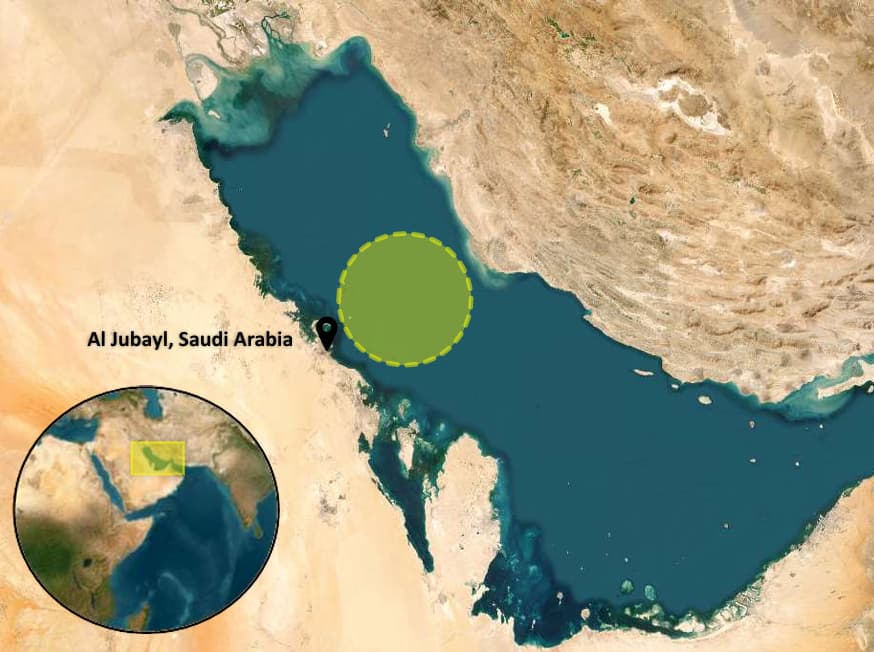
Saudi air defenses intercepted a drone targeting the Shaybah oil field in the country's Eastern Province earlier Wednesday, sparking a vehicle fire that killed a Filipino and a Nepalese resident and injured two others, according to the state-run Saudi Press Agency (SPA).
"The interception resulted in a fire breaking out in a vehicle belonging to a contractor working in the field, outside the facility's perimeter, with no impact on operations," an official source at the Ministry of Energy told SPA, noting that the incident also left a Pakistani and an Indian resident wounded.
The Saudi General Authority of Civil Aviation earlier in August reported a deadly strike that killed 12 people and injured 309 others, followed by another projectile attack a day later that resulted in one death and 11 injuries.
The departure order also follows wider regional events in relation to the US-Iran war and an escalation in both attacks and related rhetoric on multiple fronts.
The order comes two days after US Defense Secretary Pete Hegseth met with Israeli Prime Minister Benjamin Netanyahu during an unannounced visit to Israel on Monday as well as US commanders in the region. The US Embassy in Baghdad on Monday urged Americans across the Middle East to remain vigilant amid heightened regional tensions.
Israeli Prime Minister Benjamin Netanyahu said on Wednesday to a graduating class of defense officers that the the only way to remove the threat posed by Iran was to "topple the regime."
"This is the directive I have issued to the Israel Defense Forces, to the Intelligence, and to all our security branches," he added, without specifying when or how that directive would be executed.
Meanwhile, addressing reporters from the Oval office regarding the strategic stance toward Iran on Tuesday, US President Donald Trump remarked, “We’re doing very well with Iran, we just have to make a final decision of which way do we want to win. Do we want to win the nice way or the not nice way.”
Iran on Tuesday threatened to target undersea internet cables in the Strait of Hormuz affecting internet connectivity in Gulf countries, as well as US military bases beyond the Middle East if its infrastructure came under attack.
An Iranian security source on Wednesday warned that Tehran was prepared for an all-out war in the event of renewed US-Israeli strikes and claimed that Iran possessed the technology and military capabilities to strike US bases beyond the region, saying Tehran would adopt more assertive measures to deter Washington from launching further attacks.
Separately, an unnamed senior Iranian security official told state-owned English-language Press TV on Wednesday that Tehran had prepared for an "all-out, multi-layered, and comprehensive war" if the United States or Israel launched further attacks. The source claimed Iran had made a definitive decision to respond to any new military attack, including killings and assassinations, "without any limits or restraint."
The escalation in rhetoric comes against a backdrop of heightened internal security tensions in Iran's minority-populated regions, with Baluch armed groups operating in the southeast and Kurdish opposition groups active in the country's west.
In western Iran, the IRGC has intensified drone strikes and deployed heavy artillery and drones to pound the Shaho mountains of the Kurdistan province since Friday, as clashes intensify in the country's southeastern Sistan-Baluchestan province, which has seen a notable uptick in recent weeks.