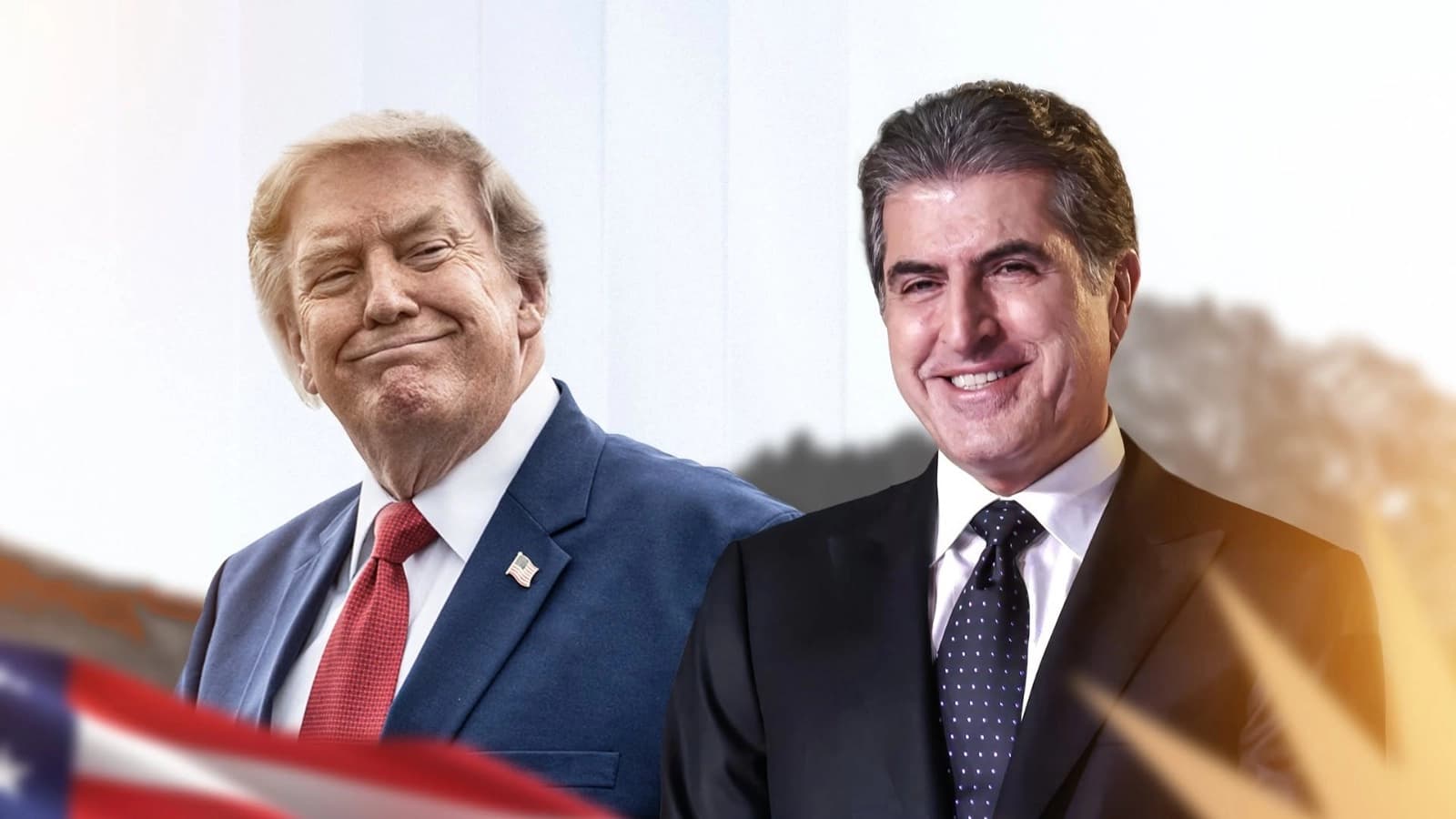

ERBIL, Kurdistan Region - Washington turned to Kurdistan Region President Nechirvan Barzani to serve as a diplomatic contact point with Iran’s Islamic Revolutionary Guard Corps (IRGC), amid concerns that the Iranian negotiating team was being being overruled by the powerful force in the peace talks, Axios reported on Sunday.
Citing three informed sources, the US-based outlet said the Trump administration sought Barzani’s help after Iranian negotiators backed away from an attempt to reach a deal in early May. US officials subsequently suspected that public-facing officials such as Parliament Speaker Mohammed Bagher Ghalibaf and Foreign Minister Abbas Araghchi might not have the authority to finalize an agreement and could be overruled by the IRGC.
US officials have repeatedly pointed to divisions within Iran’s decision-making circles and uncertainty over who has the final say in the talks. The concern has been heightened by the killing of at least 40 senior political and military leaders - including late Supreme Leader Ali Khamenei - in the initial strikes of the US-Israeli military campaign against Iran in late February.
Khamenei’s successor and son, Mojtaba Khamenei, has not made a public appearance or delivered a public address since the strikes, with widespread reports suggesting that he suffered significant injuries.
Axios reported that officials in US President Donald Trump’s administration took an “unconventional” approach, bypassing Ghalibaf and Araghchi to reach out directly to the IRGC leadership. The outlet described Barzani as well suited for the role because he is trusted by both Washington and the IRGC.
The report said former US Director of National Intelligence Tulsi Gabbard called Barzani and asked him to help establish contact with Ahmad Vahidi, then the IRGC’s deputy commander, who was promoted to lead the force last week.
Gabbard told Barzani that she was making the request with the approval of Trump and US Vice President JD Vance.
Axios also highlighted Barzani’s personal relationships with Iranian and IRGC officials, as well as his background as a graduate of the University of Tehran and his fluency in Farsi, citing veteran US diplomat Brett McGurk as saying: "Nechirvan Barzani is a pragmatic problem solver. He's respected across the region. He knows nearly everyone in Tehran as well as Washington. That's who you call in a pinch.”
Barzani agreed to Gabbard’s request and contacted his connections within the IRGC to relay a message from the Trump administration, according to Axios.
One of the outlet’s sources said Barzani insisted on speaking directly with Vahidi. An IRGC official subsequently arrived at Barzani’s office in Erbil carrying an encrypted phone to facilitate a secure call.
During the conversation, Vahidi told Barzani that the IRGC “fully” supports the negotiating team.
“We prefer to solve this crisis through negotiations," Vahidi said.
Barzani then called Gabbard back and informed her of the IRGC’s position.
After receiving Iran’s response, the Trump administration put forward another proposal, asking Barzani to host secret talks between US and IRGC representatives in Erbil. The Iranian side, however, raised security concerns, fearing that Israeli intelligence had a significant presence in the Kurdistan Region and could target its negotiators in Erbil or while they were traveling to and from the city.
The meeting did not take place.
Kurdistan Region officials have repeatedly denied the presence of Israeli intelligence bases in the Region and have emphasized that the Kurdistan Regional Government has no relations with Israel.